
Une erreur, c'est un point. Pas trois.

Un dink dans le filet, ça coûte un point. La frustration qui suit peut en coûter trois ou quatre autres.
On veut se reprendre tout de suite. On force une attaque qui n'était pas là. On continue à commenter sa faute dans sa tête pendant que le point suivant commence déjà.
Tout se joue dans les quelques secondes entre deux points. C'est court, mais c'est assez pour relâcher la tension et choisir la suite. Ou pour s'enfoncer.
Dans Le jeu mental du pickleball, un chapitre complet porte sur ce qui arrive après l'erreur. Voici un petit exercice pour commencer :
Après une faute, expirez lentement. Relevez les yeux. Donnez-vous une intention simple pour la prochaine balle.
Trois gestes, cinq secondes. Ça a l'air de rien. Essayez-le pendant une semaine, et vous allez voir la différence.
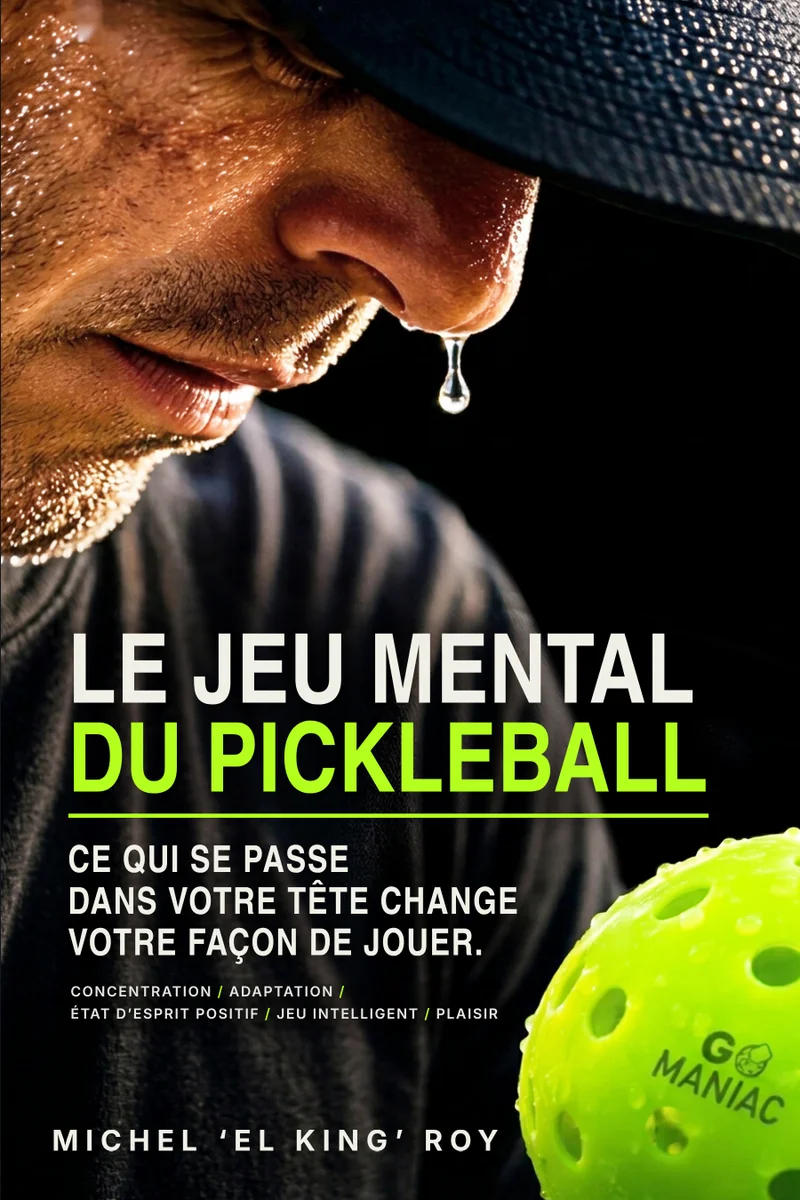
Le livre
Le jeu mental du pickleball
Ce qui se passe dans votre tête change votre façon de jouer
Michael « El King » Roy

A dink into the net costs you one point. The frustration that follows can cost you three or four more.
You want to make up for it right away. You force an attack that wasn't there. You keep replaying the error in your head while the next point is already starting.
It all happens in the few seconds between two points. It's short, but it's enough time to let go of the tension and choose what comes next. Or to dig yourself deeper.
In Inner Pickleball, a full chapter is about what happens after the mistake. Here's a small drill to get started:
After an error, breathe out slowly. Look up. Give yourself one simple intention for the next ball.
Three steps, five seconds. Doesn't look like much. Try it for a week and you'll see the difference.
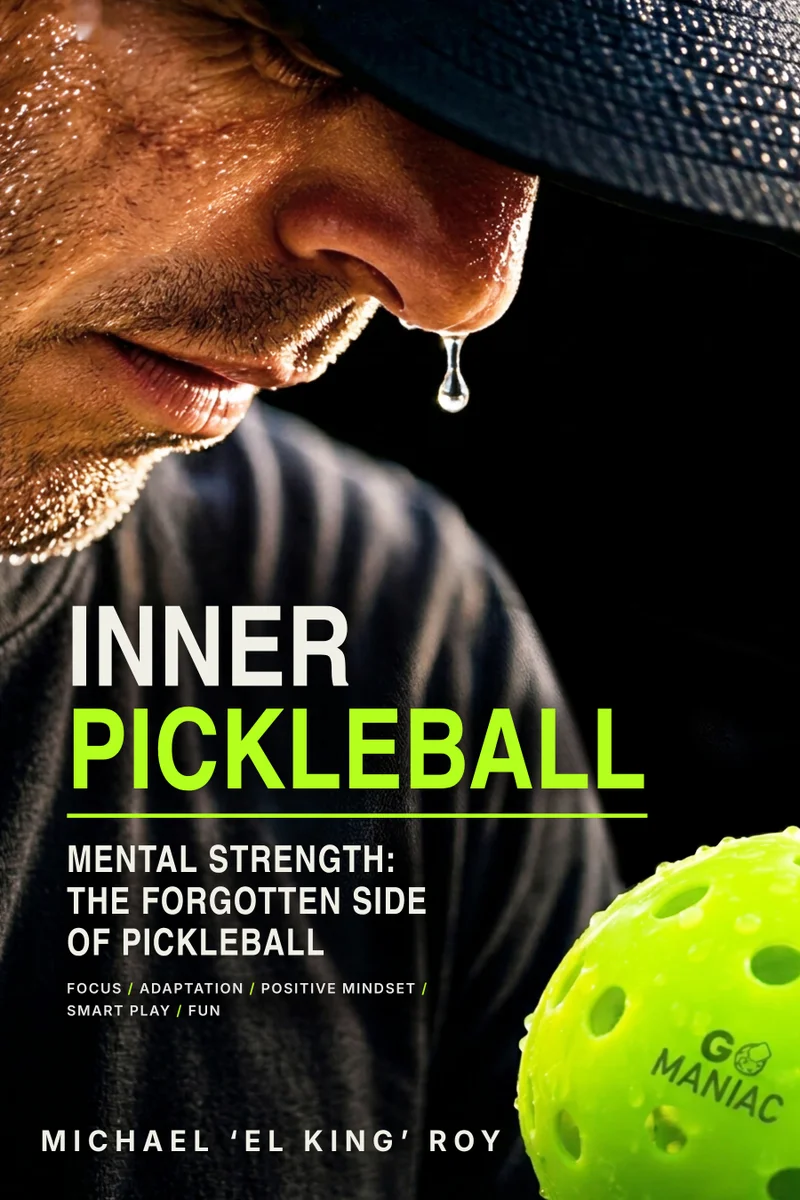
The book
Inner Pickleball
Mental Strength: The Forgotten Side of Pickleball
Michael “El King” Roy